Blog

  • Catch-All Detection & SMTP Verification

    Catch-All Detection & SMTP Verification

    If you’ve ever cleaned an email list and still ended up with unexpected bounces, you already know the problem.

    An email address can look perfectly valid. It can pass format checks. The domain can have proper MX records. Everything seems fine… until you actually send.

    That gap between “looks valid” and “actually deliverable” is exactly why we added Catch-All Detection and full SMTP checks to the PRO plan. Because basic validation just isn’t enough anymore.

    (more…)
  • Increasing Free Tier Limits on EasyEmailAPI

    When we introduced authenticated access to the EasyEmailAPI free tier, the goal was to make the service more reliable and fair for everyone using it in real production flows.

    Since then, we’ve been closely watching how the API is being used.

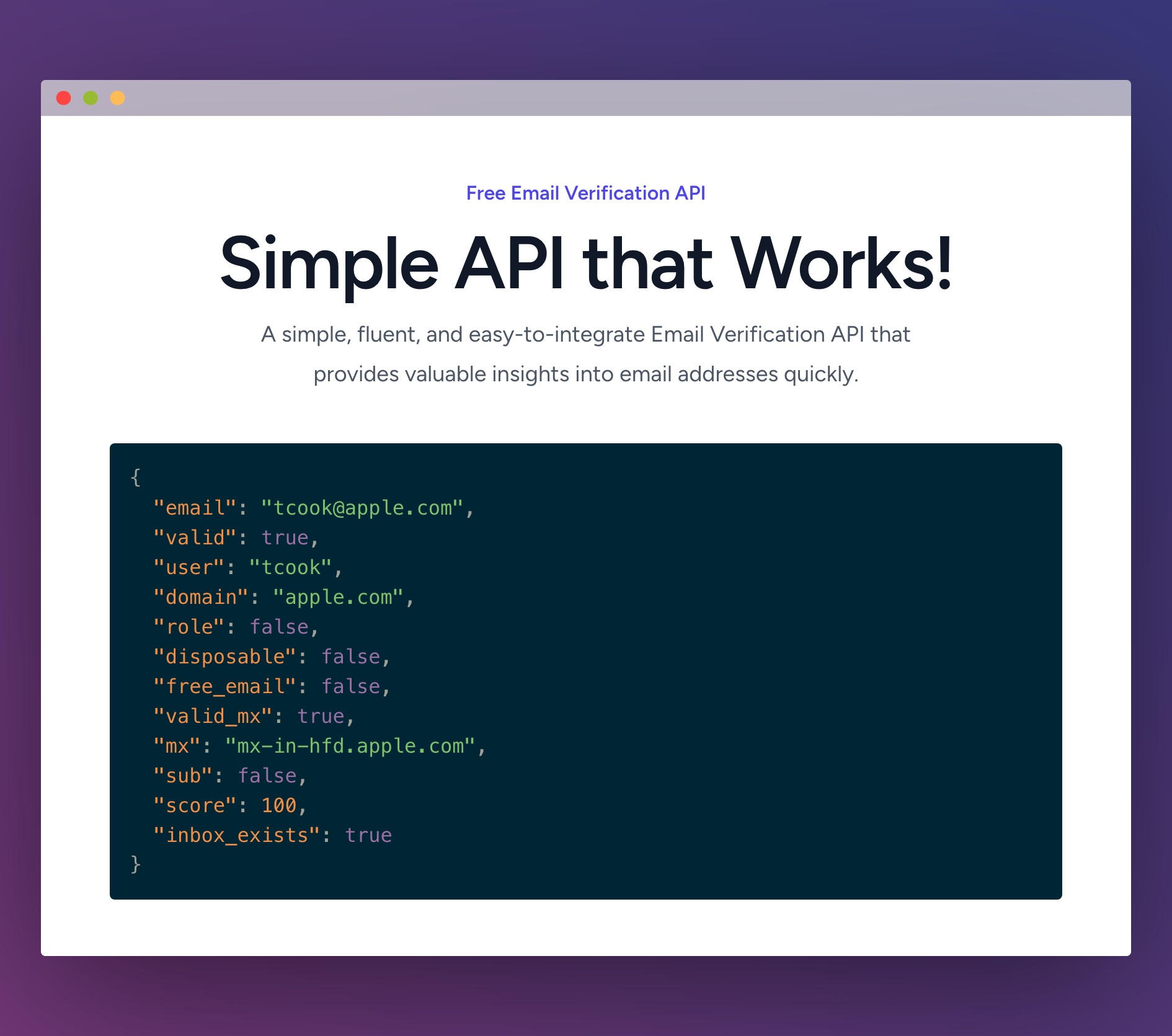
    At its core, EasyEmailAPI focuses on email validation done right. Instead of stopping at basic format checks, it evaluates whether an address is realistically usable in real systems. That includes verifying domain DNS and MX records, detecting disposable and temporary email providers, identifying role-based addresses, and applying deliverability signals that help determine whether an inbox is likely to accept mail. The goal is not just to say whether an email looks valid, but to help teams prevent fake signups, reduce bounce rates, and keep their data clean from the very first request.

    What we’re seeing is encouraging. Free accounts aren’t just testing endpoints, they’re validating real user signups, protecting checkout flows, and cleaning up inbound data before it reaches databases. In many cases, the free tier is already part of live systems.

    Because of that, we’ve decided to increase the free tier rate limit.

    As of today, free accounts can make up to 30 requests per minute, up from the previous limit of 10.

    This change is meant to remove unnecessary friction for smaller projects and early-stage products, while keeping the service predictable and stable for everyone. For many signup flows, 30 requests per minute is enough to cover real usage without workarounds or batching.

    The API itself doesn’t change. Existing integrations continue to work exactly as before. If you’re already authenticated, the higher limit is applied automatically to your account.

    We’ll continue to adjust limits thoughtfully as usage grows and patterns become clearer. The goal is not to artificially constrain the free tier, but to make sure it remains useful, sustainable, and honest about what it offers.

  • Introducing Authenticated Access for the EasyEmailAPI Free Tier

    EasyEmailAPI was built to solve a very specific problem: reliable email verification that’s easy to integrate and fast enough to run in production.

    Over the past weeks, usage of the API has grown steadily. We’re now seeing a consistent stream of requests coming from real-world systems, including user registration flows, checkout processes, newsletter signups, and internal validation pipelines.

    In other words, EasyEmailAPI is no longer just being tested. It’s actively protecting live systems.

    That’s an important milestone, and it’s also the reason for a small but meaningful change.


    Moving to authenticated access

    As adoption increased, it became clear that anonymous access to the free API was no longer the right long-term approach.

    Starting now, access to the EasyEmailAPI free tier requires authentication.

    This change allows us to:

    • apply fair, per-user rate limits
    • protect the service from automated abuse
    • better understand real usage patterns
    • lay the foundation for paid plans and advanced features

    For developers, the experience remains intentionally simple. Creating an account gives you an API key, and from there the API works exactly as before.

    The documentation has been updated to reflect this change, including authentication examples and updated request samples.

    You can find the full documentation here.


    Real usage, real impact

    One of the most encouraging signals for us has been how the API is being used.

    We’re seeing EasyEmailAPI integrated directly into:

    • signup and onboarding flows
    • e-commerce account creation
    • newsletter and marketing list validation
    • backend services that enforce data quality at the edge

    These are high-signal use cases. They tell us that teams are relying on EasyEmailAPI to reduce noise, prevent abuse, and keep their systems clean from the start.

    That trust matters, and authenticated access helps us maintain it.


    Built for production, not demos

    EasyEmailAPI is designed to be a small but dependable building block.

    It focuses on:

    • fast response times
    • predictable results
    • straightforward integration
    • minimal operational overhead

    Requiring authentication for the free tier is part of making sure the service remains reliable as usage continues to grow.


    What’s next

    Authenticated usage opens the door to features we’ve been planning for a while, including:

    • higher limits for paid accounts
    • bulk tools such as email list cleanup
    • clearer usage insights per user
    • stronger guarantees around performance and stability

    We’ll continue to build carefully, keeping the API focused and avoiding unnecessary complexity.

    If you’re already using EasyEmailAPI, thank you for trusting it in your systems.

    If you’re just getting started, you can create a free account and get your API key here.

  • When Frontends Ignore Translatability, Users Pay the Price

    When Frontends Ignore Translatability, Users Pay the Price


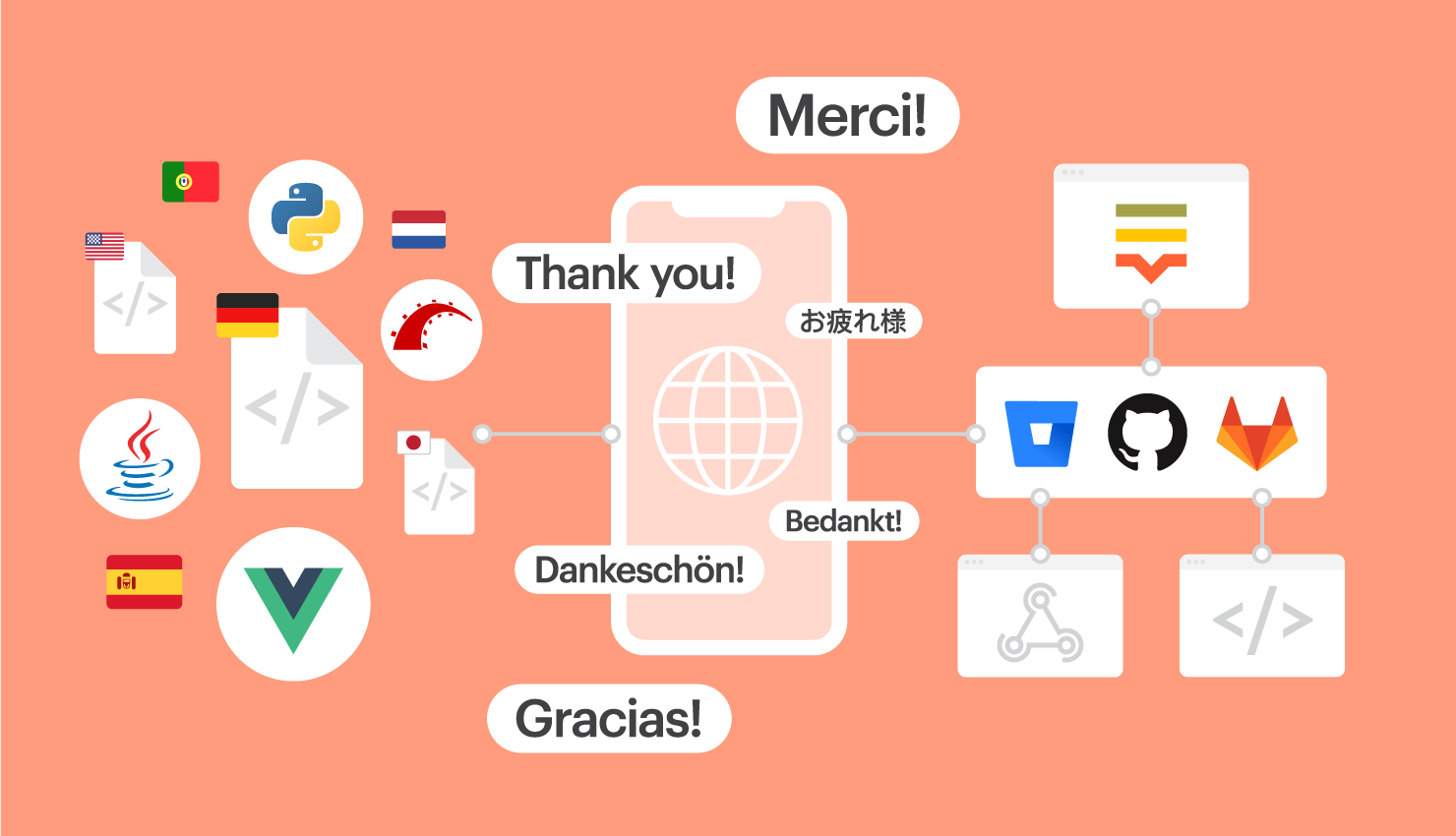
    Most people don’t think about website translation until they suddenly need it. I didn’t either, at least not until I moved to Germany and realized how many sites here still don’t offer an English version. At first you shrug and think, fine, the browser can translate for me. Modern tools are pretty good, right?

    (more…)
  • Why Email Validation Matters for Modern Businesses

    Why Email Validation Matters for Modern Businesses

    Email remains one of the most reliable channels for acquiring customers, nurturing relationships and driving revenue. Even with the rise of social media, messaging platforms and ads, email still performs better than most channels when it comes to actual conversion. It only works well, however, when the email list is healthy.

    (more…)
  • Introducing EasyEmailApi.com

    Introducing EasyEmailApi.com

    Easy Email API is a lightweight, developer-friendly Email Verification and Validation API designed to help businesses, SaaS projects, and web applications maintain clean, deliverable user lists. It streamlines the process of checking email addresses at the point of capture, helping avoid invalid sign-ups, disposable or spam-prone addresses, and undeliverable mailboxes. 

    (more…)
  • How to Scale Software Projects Without Hiring Full-Time Engineers

    How to Scale Software Projects Without Hiring Full-Time Engineers

    Hiring full-time engineers sounds like the obvious next step when a company starts to grow. But in many cases, it’s not the smartest one.
    Teams often discover that what they really need is scalable engineering capacity — not more employees, management layers, or long-term commitments.

    After more than ten years helping startups and SMEs scale their systems, I’ve seen that it’s possible to move faster, stay flexible, and keep costs under control without building a full in-house team. Here’s how.

    (more…)
  • Why Freelancers Build Faster: Lessons From 10 Years in Software

    Why Freelancers Build Faster: Lessons From 10 Years in Software

    Most companies think hiring a freelancer is just a temporary fix, something to fill the gap until they find the right employee.
    After more than a decade in software engineering, I’ve learned that the reality is often the opposite. Freelancers tend to build faster, more efficiently, and with fewer dependencies than most internal teams ever can.

    I’ve seen this proven across startups, SMEs, and even high-traffic platforms processing billions of requests per day. Here’s why freelancers often deliver results in a fraction of the time.

    (more…)